
Hatching and Raising Coturnix Quail : A Rewarding Journey
Embark on the fulfilling path of raising Coturnix Quail for self-sufficiency. This beginner's guide will equip you with the knowledge to successfully hatch and nurture your flock, bringing prosperity and satisfaction to your home. We're here to help you get started!
The First Step: Proper Incubation
For beginners, achieving a successful hatch rate starts with proper incubation. Learn the crucial steps to ensure your Coturnix Quail eggs develop optimally, setting the foundation for a thriving flock. From temperature to humidity, we cover it all to maximize your chances of success.
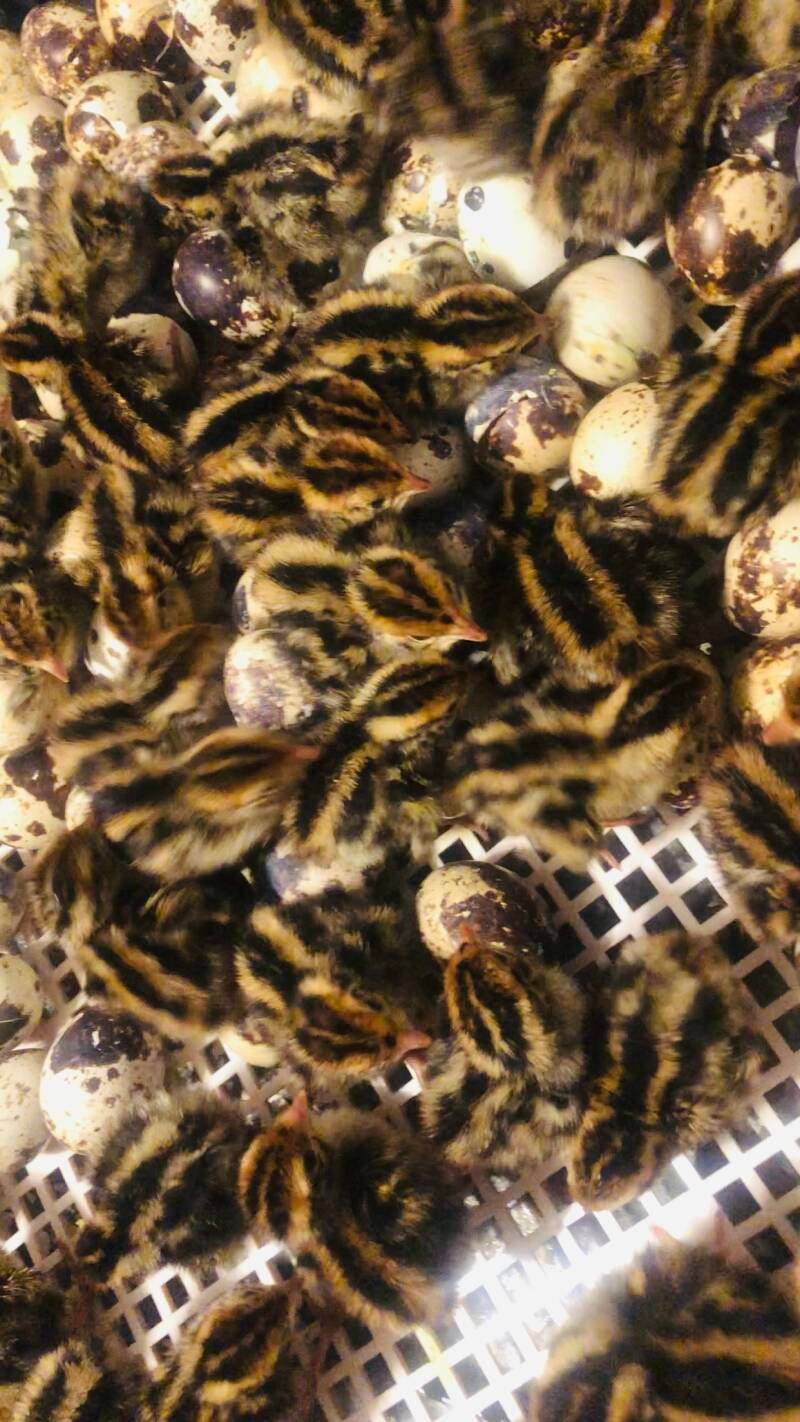
Incubation
First know your incubator. All incubators are different and require different temperature and humidity settings. Most incubators come with instructions how to hatch each different type of egg.
If you do not know your incubator's instructions. Best practice is to have a temperature and humidity gauge placed next to your hatching eggs at egg level. Coturnix Quail Eggs have good hatch rates with 99.5 degrees Fahrenheit through the incubation of average 17-18 days. Also with a 45-55% humidity for the first 14 days, then 55-75% humidity for the remaining days of the lockdown period where eggs should no longer be turned.
Hatch Rates of 70-80% are common with Coturnix Quail!
Coturnix Quail Hatching guide :
step 1 : Once you receive your hatching eggs have them rest pointy end down for 12-24 hours to allow the air bubble to settle to the broad round end of the egg. Also ensure they are at room temperature to prepare for the warmth of the incubator not to temperature shock them to ensure the best hatch rate possible.
step 2: Place Hatching Eggs in the incubator.
average incubator temperature- 99.5 Fahrenheit
Average17-18 days to hatch. Day 1-14 turning eggs a full turn at least 4 times a day- humidity 45-55% recommended. Day 15-18 is lockdown period/ no turning and humidity of 55-75%
Set the required temperature and humidity for your incubator. Ensure your settings are correct for the amount of days for the incubator to run as well. 20-21 days should be efficient run time for most incubators. Most Quail chicks will hatch before 19 days. After that the chance of healthy hatchlings deminishes greatly. Hence, the importance of having a reliable incubator set correctly and temperature and humidity settings are trusted. An extra temperature/ humidity gauge next to hatching eggs is strongly recommended.
step 3 : lockdown period - (day 15-18)
DO NOT OPEN THE INCUBATOR DURING LOCKDOWN. Doing so can let out humidy quickly shrink wrapping chicks in their eggs by drying the membrane.
Egg temperature- 99.5 Fahrenheit. Humidity - 55-75%
This is the crucial period of incubation where temperatures and humidity need to remain within the correct ranges. Embryos are sensitive and mortally vulnerable at this time. Stop turning eggs and ensure no temperature fluctuations or humidity fluctuations change too drastically.
Watch them hatch usually starting on day 17 but some may start as early as day 15 on rare instances. The majority of healthy hatchlings should finish hatching between day 18-19.
Step 4 : Getting Hatchlings in Brooder
Allow at least 24 hours after first chicks hatch to get the first batch of hatchlings in the brooder. This is for chicks to dry and lessen chances of remaining hatchlings being shrink wrapped in their shells. Depending on your hatch size, there may or may not be more hatching continuing. If so, allow each batch of hatchlings to dry and fluff up before taking them to their brooder. This prevents them getting chilled. Chicks are sensitive their first days of life but do grow fast.
Brooding Quail Chicks
Essential Brooder Supplies
Heat plates, Heat lamps, brooder boxes, no-drown chick waterers, gamebird starter feed 30% protein
-Brooder surface temperature should be 98-100 Fahrenheit for the first couple of days then dropped to 97-95 Fahrenheit for the remainder of week 1.
-The temperature will need to be dropped 5 degrees each week until week 4 when chicks are fully feathered and can regulate their own body temperature.
- Make sure chicks do not get cold, run out of water or food. They grow fast and need proper care to support their fast growth. Watch chicks closely, they let you know if they are cold or hot by moving toward or away from the brooder heat source.
Raising Coturnix Quail
-At the 4-6 week mark, Coturnix Quail are ready to be placed in their breeding, laying or finishing areas. At this age they are becoming mature and need to be separated from young birds.
-Hens will readily lay eggs without roosters present.
- A group/covey for breeding purposes does best for temperament and egg fertility at an average 5 hen per 1 rooster ratio. Separate cage sections for coveys helps regulate this as well.
JUMBO CREEK QUAIL FARM RECOMMENDED
A great Laying hen feed is a gamebird crumble feed with 2.8 -3.8% calcium and 22-26% protein
A great growing quail feed is a gamebird crumble feed with .75-1.5% calcium and 28-30% protein. (Chicks can start on this feed their first day in the brooder and stay on it until maturity).
Mature Coturnix Quail
Coturnix Quail mature in 10 weeks. Hens start laying eggs in 6-10 weeks with adequate food, water, low stress and 12-16 hours of light per day. Wether that light is natural or supplemental. They can lay on average 300 eggs per year with sufficient light duration.
Coturnix Quail can produce eggs with high fertility rates after 10 weeks of age. They are at adequate weight for harvest at 6-10 weeks of age with most farms choosing 8 weeks for harvest time. They have their highest production for the first 1 1/2 years, then a slow and steady decline in production. Their average lifespan is 2 years with some living up to 5-6 years.
Ensure your Quail have constant supply of food and fresh water. They are a fast growing, high production poultry and stay healthy with ample amount of food and fresh water.